Please note: due to global color settings, I am changing the color of the navigation bar, etc, which will change this webpage AFTER I did the assignment, so I am inserting images of my assignment immediately below this note. The original webpage is below the images.

A Care-free Native for East Bay Gardens
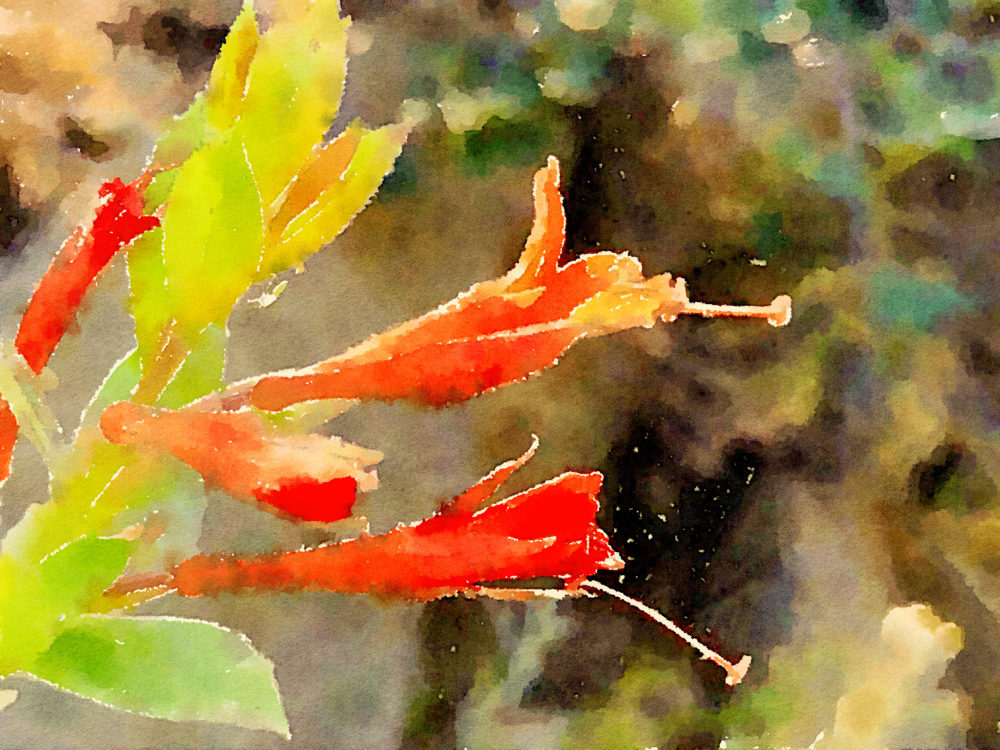
California fuchsias are one of my top three plants, and this article will outline why I think every one should have at least a few of these plants in their yard, if not three or four!
I plant primarily for wildlife: insects and birds. To be more specific, I plant for bees and hummingbirds, although I seem to attract a lot of other insects and songbirds as well, not to mention butterflies, but that’s another article. Secondary to planting for wildlife, I also keep in mind that California has been in a drought for years now, and it is important that gardeners and homeowners take that into account when planning landscaping and home gardens.
I don’t have a very large front or backyard, but I take advantage of what I do have and pack in as many plants as possible, sometimes too many since many plants like a little room and breathing space around them. But gardening is a multi-year processand is the essence of learning from your mistakes. After all, you only need pull the non-behaving plant, put it in the compost pile, and plant another one in its place. It is fair to say that I have tried many plants and if a plant doesn’t fulfill my requirements, out it goes.
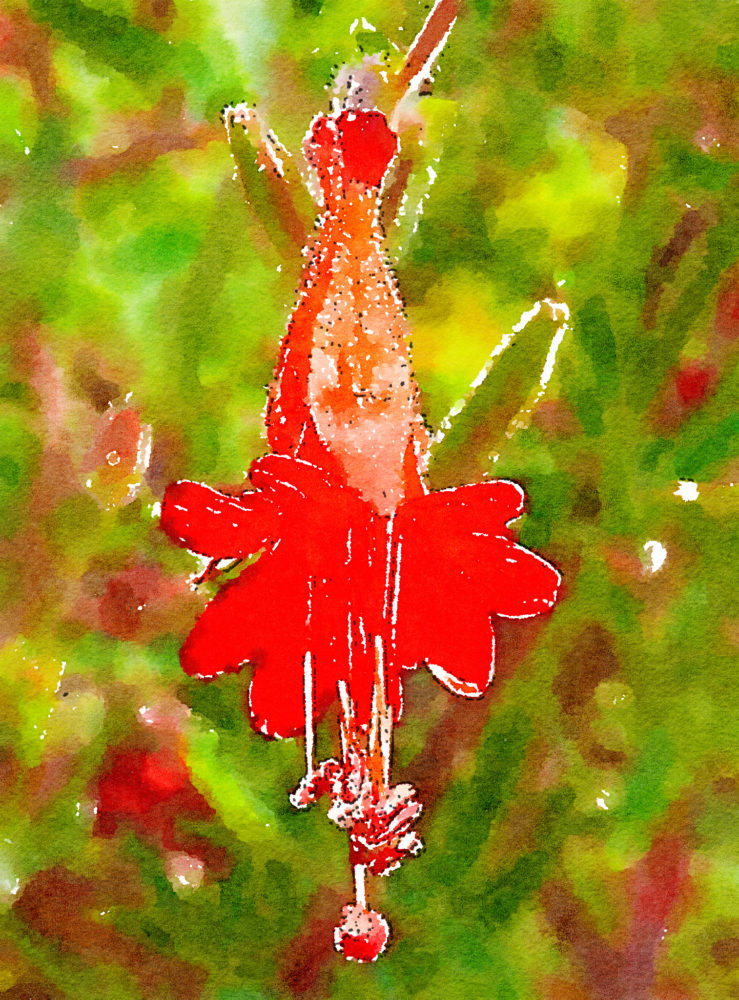
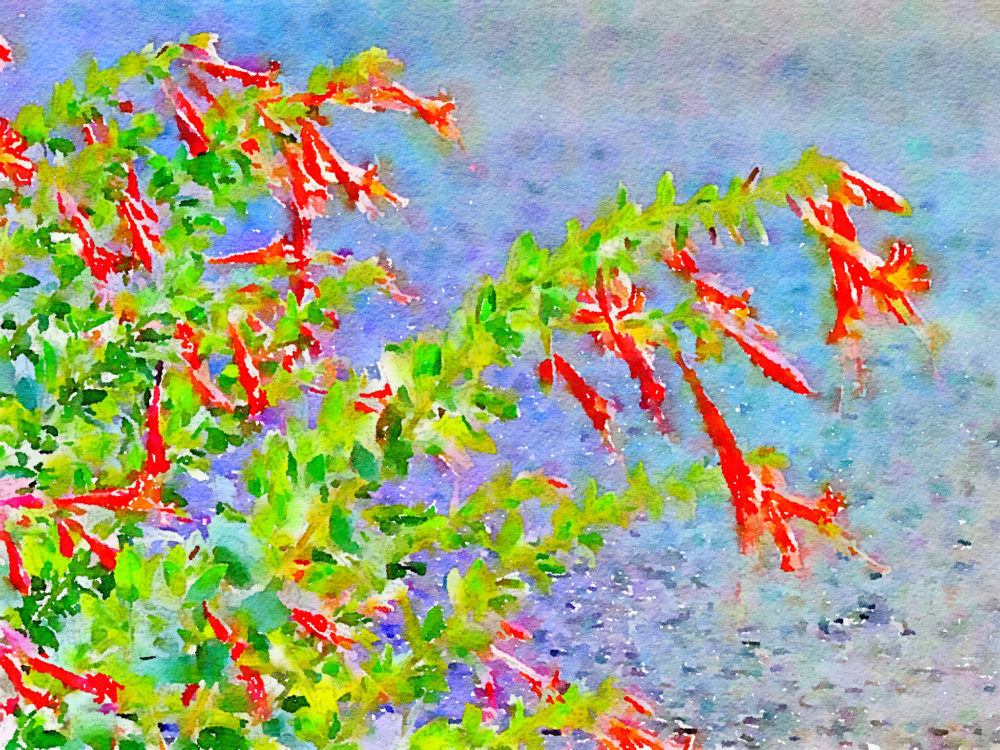
Fortunately, we Californians have a huge list of native plants to choose from that make gardening for wildlife and drought easy, and I’m going to highlight a particular California native, the California fuchsia, or Epilobium canum.
California fuchsias deserve to be in every single yard in California. Most species grow to be about 2-3 feet tall, show off beautiful red to orange flowers in late summer to fall (depends on the plant), and require almost no water once they are established, although they appreciate a good long drink once or twice during our dry summers to stay green. They are a small shrub, getting to be about 2-3 feet wide, but most will gradually spread to take up more room if they can. They are easily pulled up if you want to keep them small, though. The ones that have thin and needle-like leaves can handle sun all day, although the ones will larger leaves will appreciate some afternoon shade to keep them happy.
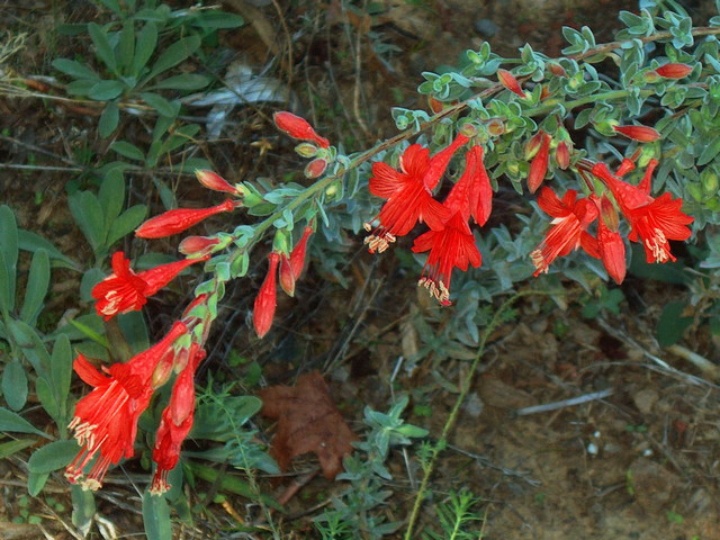
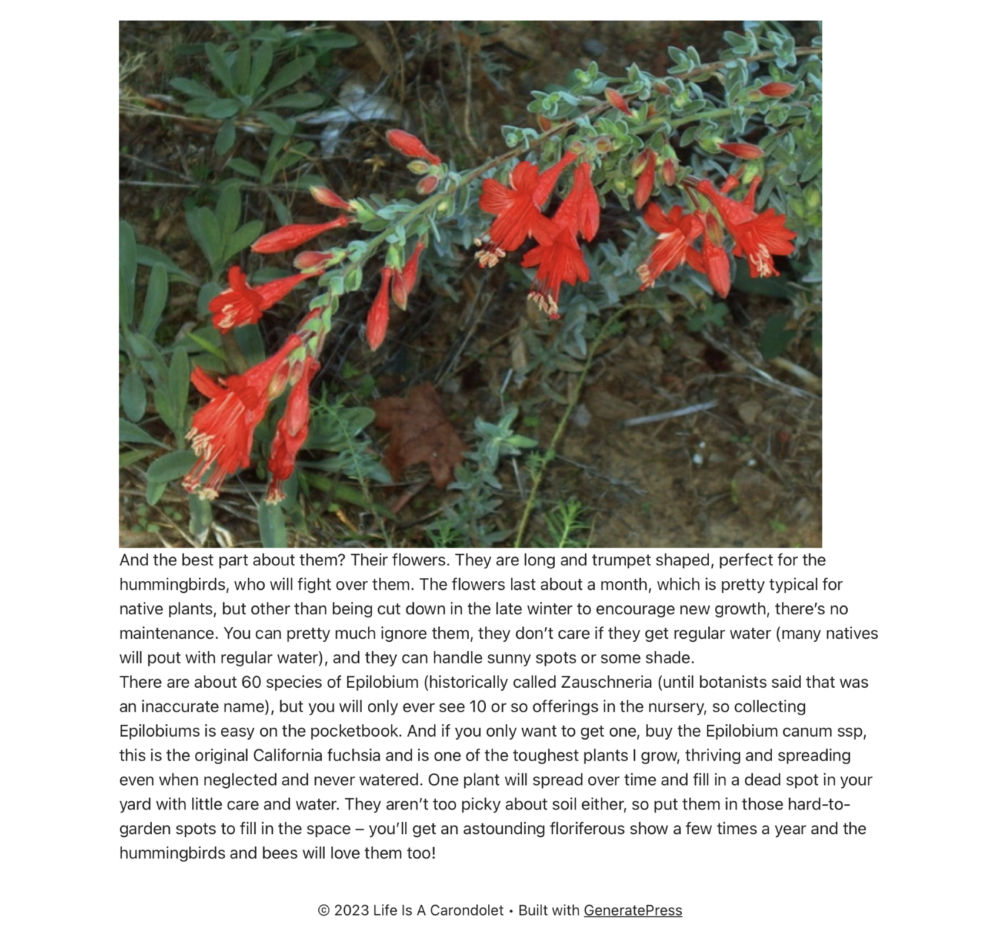
And the best part about them? Their flowers. They are long and trumpet shaped, perfect for the hummingbirds, who will fight over them. The flowers last about a month, which is pretty typical for native plants, but other than being cut down in the late winter to encourage new growth, there’s no maintenance. You can pretty much ignore them, they don’t care if they get regular water (many natives will pout with regular water), and they can handle sunny spots or some shade.
There are about 60 species of Epilobium (historically called Zauschneria (until botanists said that was an inaccurate name), but you will only ever see 10 or so offerings in the nursery, so collecting Epilobiums is easy on the pocketbook. And if you only want to get one, buy the Epilobium canum ssp, this is the original California fuchsia and is one of the toughest plants I grow, thriving and spreading even when neglected and never watered. One plant will spread over time and fill in a dead spot in your yard with little care and water. They aren’t too picky about soil either, so put them in those hard-to-garden spots to fill in the space – you’ll get an astounding floriferous show a few times a year and the hummingbirds and bees will love them too!