
Introduction to String of Turtles plants
String of Turtles are a succulent plant that is hugely popular these days because the leaves look like the back of turtles, even curving and domes like a turtle shell. If you don’t believe that Turtles are succulent, take a look at a leaf from the side:
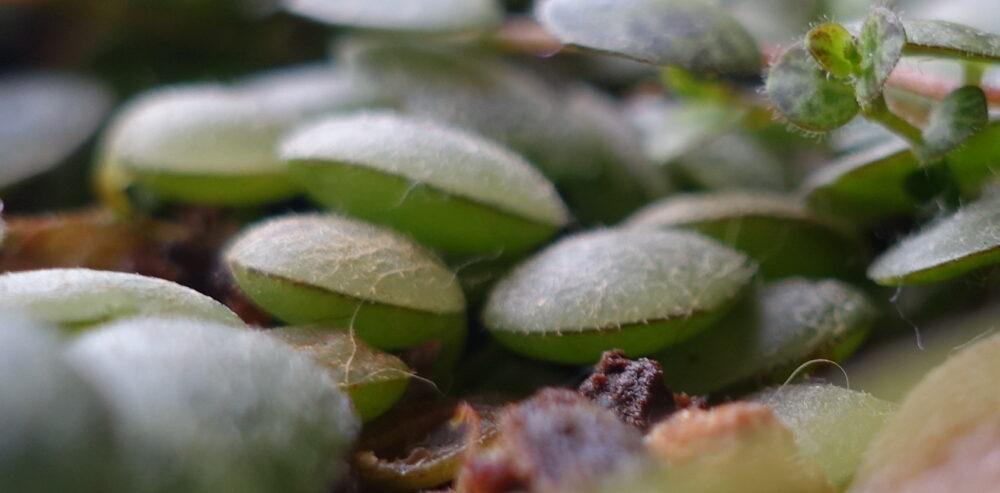
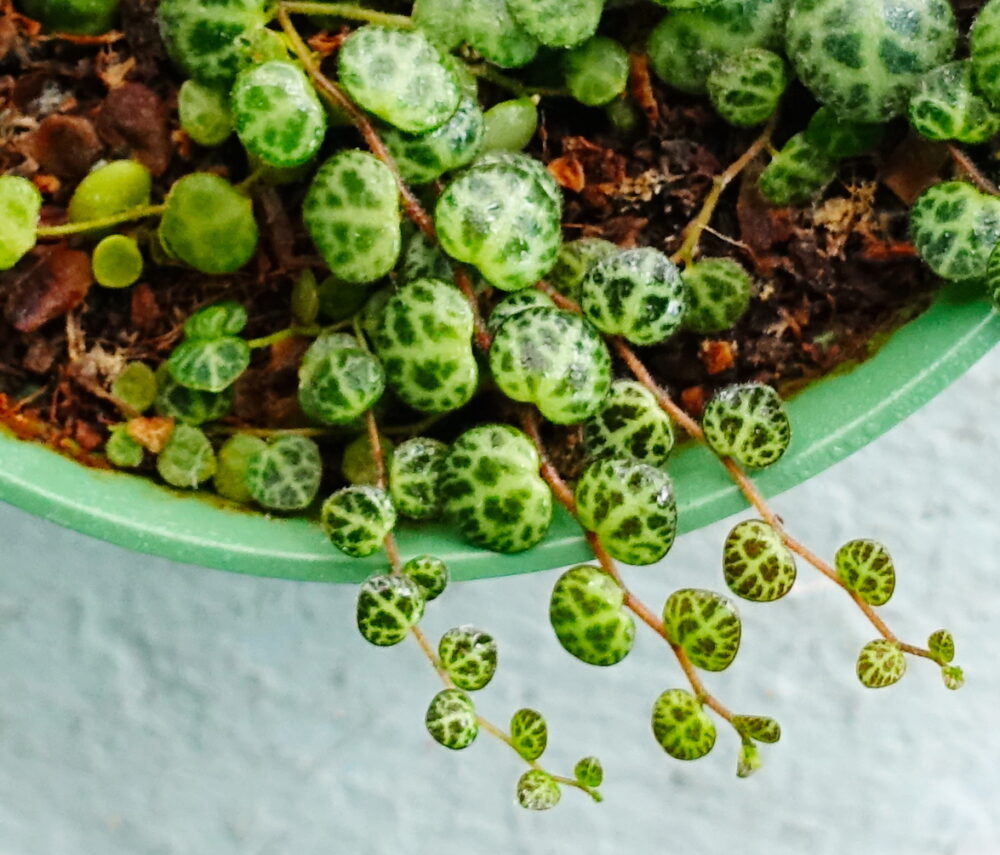
You can see from the side view that they can hold a lot of water and need to be treated as a succulent plant (i.e., little water) instead of a tropical plant that can be watered every week. The photo on the right shows the “turtle” coloring and some of the domed shape of the leaves. So cute!
What kind of potting soil do they need?
I tend to use a gritty mix with my regular succulent plants, which consists of sieved and washed pumice (around 1 mm in size, so no dust which can make the soil like concrete), mini-bark pieces, and some coconut coir, which drains water but not as much as the pumice and bark. I find for my succulents with thinner leaves that more coconut coir tends to be the “secret sauce” that keeps them happy, and Turtles are no exception.
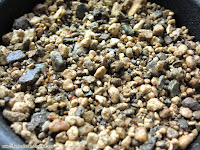
If you aren’t familiar with gritty mix for succulents, you can do a quick search for “Al’s gritty mix” for lots of helpful threads and posts about combining pumice and woody bark (both sieved to roughly 1-2 mm in diameter). For many string plants (String of Pearls, Dolphins, etc.), they benefit greatly from the addition of coconut coir to the planting mix, perhaps because it allows their shallow roots to grow more easily than the larger pumice and bark pieces. I aim for about 50% coir, 25% each of pumice and bark.
How do I water them and how often?
As mentioned above, String of Turtles plants are succulent and you are far more likely to over-water them then under-water them if you aren’t careful. I water mine once every 3-6 weeks depending on how humid and warm it is. In my Northern California humid and cool winters (my house is kept at 63 degrees), I water less frequently or up to every 6 weeks, and in our dry and warmer summers (we don’t have AC), I water closer to every 3 weeks or so. The best thing to do is to take your cues from the plant itself. Only water when:
The soil looks very dry and the pot is considerably lighter than immediately after you water the plant.
The leaves are just starting to wrinkle and look a little thirsty. This takes time and observation to notice wrinkly leaves, so use the weight of the pot at first to determine when to water.
I know, I know, every 3-6 weeks? Like I said, they are deceptively succulent and you will absolutely kill them if you water them every week. They can handle being dry much better than they handle too much water, so as you get used to taking care of your Turtles, err on the side of too little water. The wrinkling of the leaves is very subtle, so using the weight of the pot and the dryness of the top inch or so of the soil will be a better indication of when to water them in the beginning.
As for the actual watering, you are going to find a lot of conflicting information on the internet, the main one being to only water from the bottom (where you set the pot into a bowl of water and let it wick up) or to water from the top, but only once or twice to make sure the soil doesn’t get too wet. I believe this advice comes mostly from people who water their plants too often, but if you are only watering it once every 3-6 weeks, you have thirsty little Turtles! And so my process is a little different. I have a bowl to catch the water draining through, but after I pour water on top of the plant (usually twice), then I let the String of Turtles sit in the bowl of water for about 10 hours, or until I see the water level in the bowl go down, indicating that the roots, leaves, and the pumice/coconut coir have absorbed some water. Otherwise my plants don’t get enough water.
How much sun do they need?
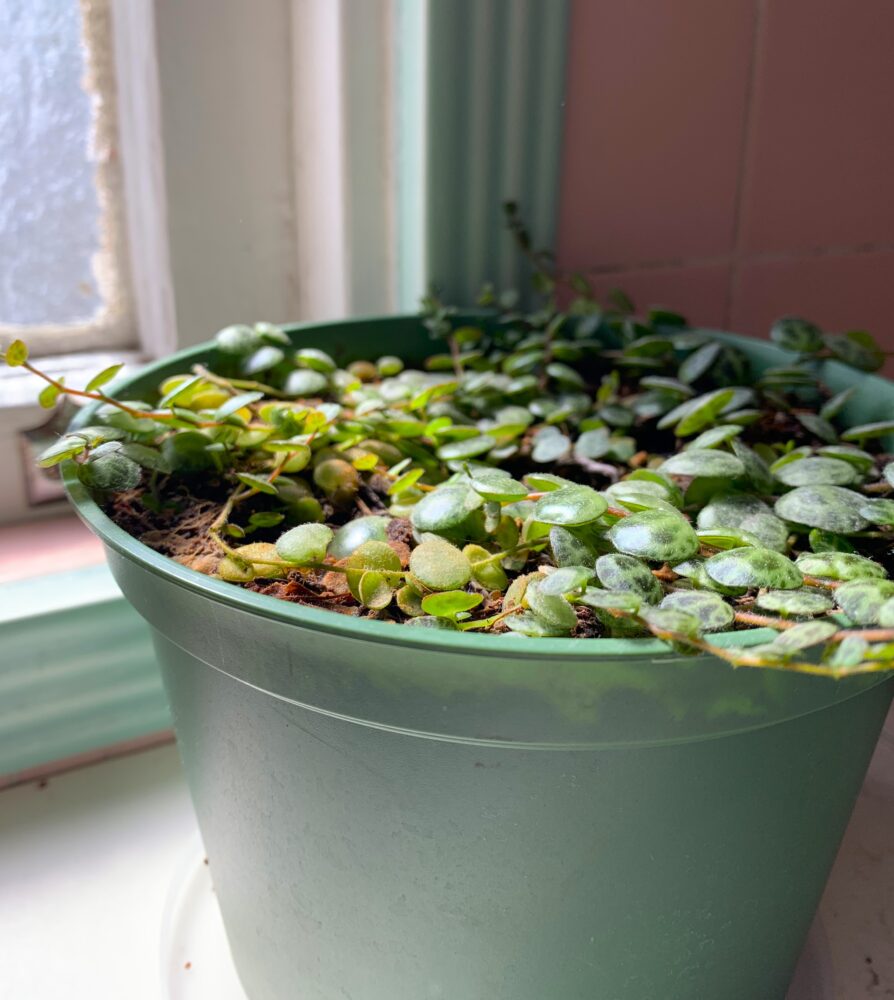
Turtle plants want filtered light, so if they are outside, they need to have some shade so they are NOT in direct sunlight for more than an hour or so. Deep shade is too much, they definitely prefer bright light, just not direct sunlight all day. If inside, a bright east or west window will work, and here, some direct sunlight is fine, because the window protects them from the direct sunlight. I have my Turtle plant in my bathroom where it seems to appreciate – or at least tolerate – the higher humidity when someone takes a shower, but our humidity is generally higher anyway in our winters, so I don’t think it affects the plant too much.
You can see in the adjacent photo the amount of sun my plant gets during the day – it is bright, but filtered sunlight through the window. Perfect.
How and when do I fertilize them?
Use a basic fertilizer from your favorite nursery (they can help you find one) and use every other watering. If you see any mineral buildup on the surface of the soil (white crystals), take a break from the fertilizer for a few waterings and don’t save the run-through from the first pour over to help flush the built up fertilizer. You can also safely skip the fertilizer in the winter when your plant will be growing at a slower rate, depending on how cool you keep your house.
Can I grow them outside in Northern California?
I am in the San Francisco Bay Area, an absolute paradise for growing almost all succulents outside, and indeed I have 96% of my plants outside year round. Of course, it we ever have a hard freeze, I’ll need to bring the pots inside, but in general, they thrive outside, even during our cold and rainy winters. I even plant quite a few in the ground, with great success, but that’s an article for another day.
However, I learned a hard lesson with my String of Turtles plants. When I first brought them home in early summer a few years ago, I had them on my front porch, which is shaded by a maple tree and keeps the porch in bright shade. The Turtles thrived and were growing long strings off the side, making me wonder about why they have a reputation for being slow growers. I kept them outside for that first winter, and you can see from the following series of photos what happened:
June 29th, 2021
June 21st, 2022
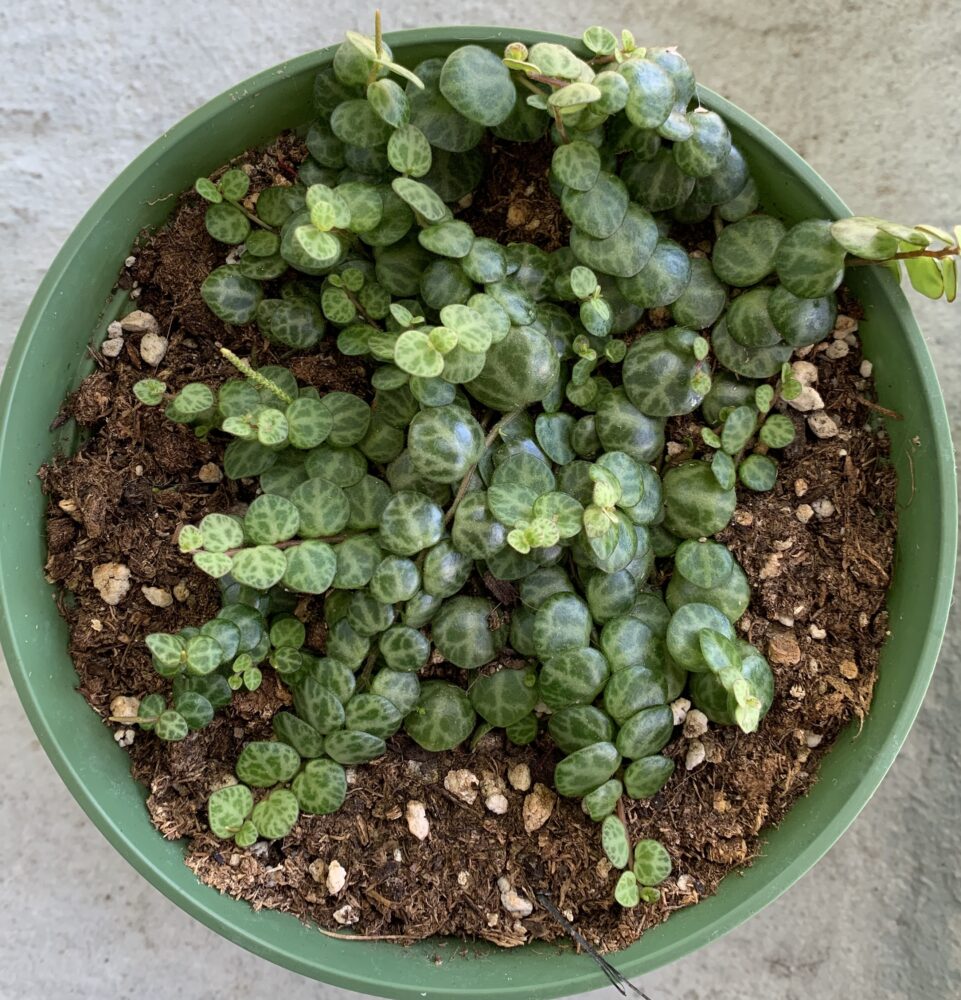
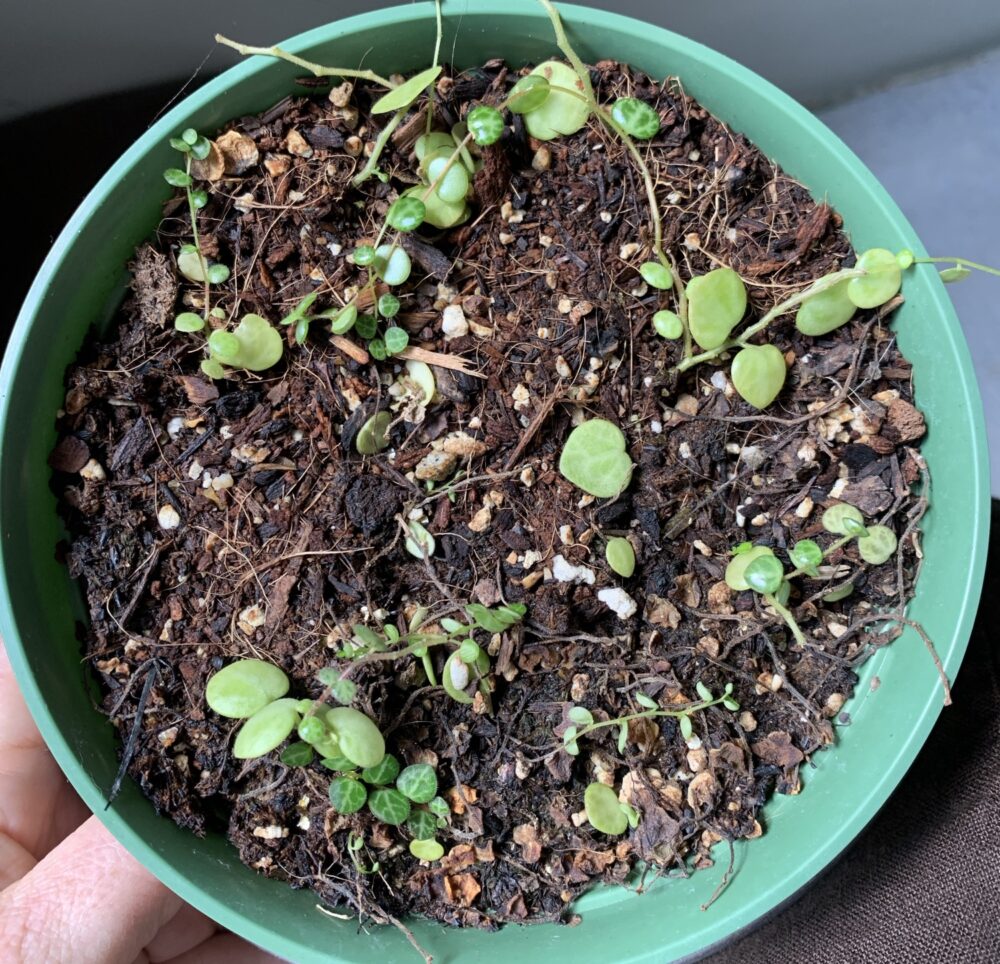
January 10th, 2023
March 29th, 2023
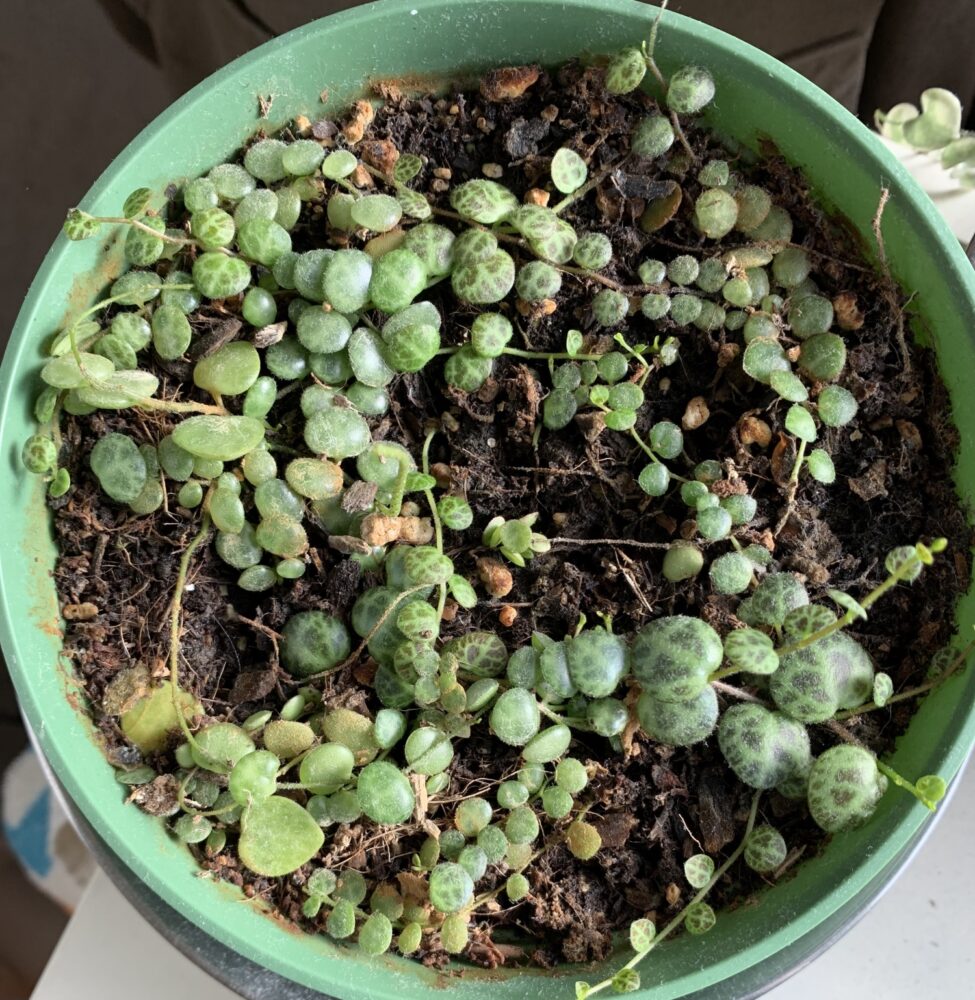
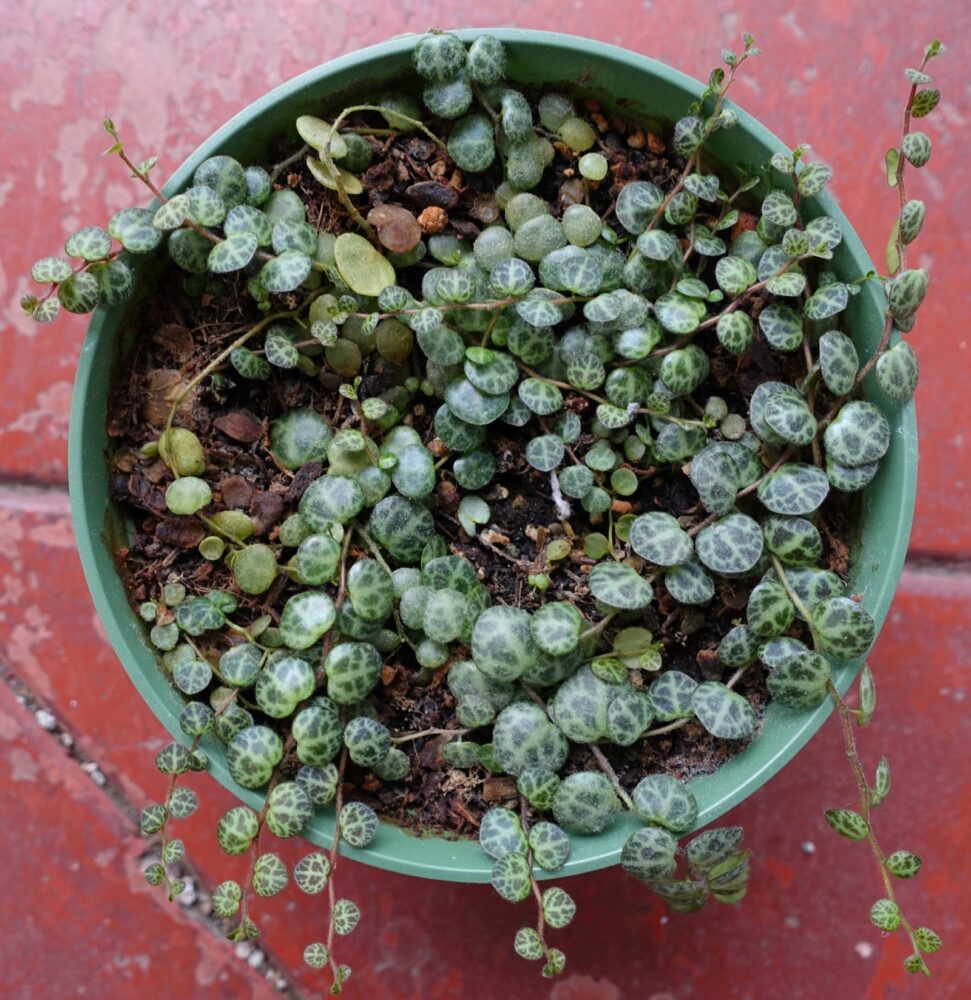
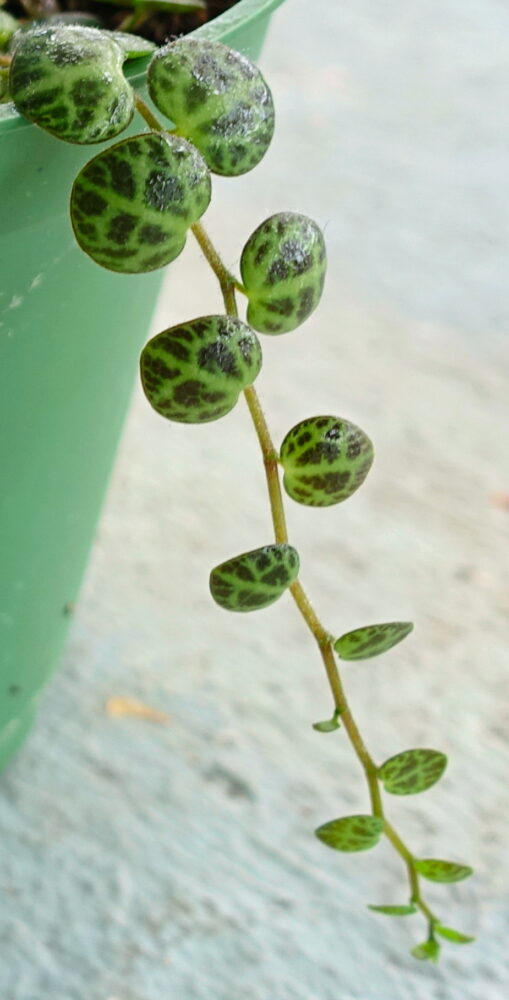
That first summer (June 2021), they were growing and thriving outside, but by the next June (June 2022), you can see that there’s only a few tendrils left. The plant didn’t start dying off until March-April from being outside and it took me some time to realize that I needed to bring them into the warmer house. I think it was cumulative cold temperatures because we didn’t have any freezes that winter. It then took a lot of TLC and time for them to start thriving again, but by January 2023, they were on their way, and now, in March, they are back to their original growth and exploding. You can see the side growth over the edge of the pot – by the end of this summer, I’ll need to have them in a hanging basket so they have room to dangle and grow some more.
To end, String of Turtle plants are beautiful and fun, and with a little care, you can have a lush and thriving plant too.